Tuesday, February 21, 2012
Culture Circles at IUME this Saturday!

Sunday, August 1, 2010
The Sound of Silence
Saturday, July 10, 2010
Thank You, South Africa!
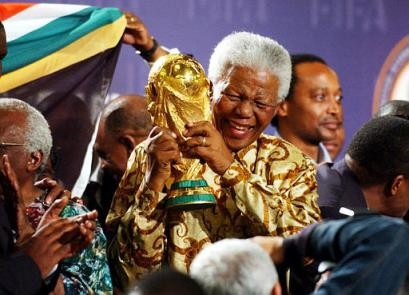
The boys are up at 7 watching Invictus and talking about Mandela and Apartheid and change. I thank the South Africans for being amazing hosts, but most of all for their dignified and humanizing public media pedagogy. For teaching the next generation why we should pay attention to the past, present, and future of this great nation.
Saturday, June 26, 2010
G20 Summit: Economic Recovery or Economic Hegemony?

The G20 (i.e. Group of Twenty Nations) collectively control 85% of the world's GDP and 80% of the world's trade. Collectively they also create 99.8% of the world's waste, pollution, and chaos. As a group however, when they meet today and tomorrow in Toronto, they are generally working to figure out how to maintain their collective economic hegemony. Under the guise of a debate between "austerity" (this word in quotes because the median citizen of the globe would hold a far different definition of the term austere) and "stimulus", they collectively avoid any conversation about the responsibility that comes along with privilege. The agenda is one that frames economics as the science of understanding financial markets and not the politics of accumulation and alienation that have configured so much power and wealth in the hands of so few and at the expense of so many. Even in these democratic nations many many people are denied access to this accumulated wealth. So the protests at the event are warranted, and I wish the organizers and activist luck in this regard. Because under the pretense of security the organizers of this event are doing everything they can to eliminate civil disobedience and the democratic imperative. The long-term goal, however, requires us to create an agenda that redefines economy to include the science of the impacts of capital accumulation on the lives of real people! Here are a few items that might be included in a more authentic G20 Summit:
1. The concentration of global poverty in black and brown and female bodies
2. The concentration of global poverty in Africa and Asia
3. The increasing gap between rich and poor in the G20 nations
4. The impact of corporate hegemony on the environment
5. The economics of war
6. Educational attainment and economic power
7. Service
Not that I don't care about the Dow Jones, but I believe there are other indices of economic health that are far less abstract and far more essential to our global recovery.
Monday, June 7, 2010
Remember Selma, 1965?
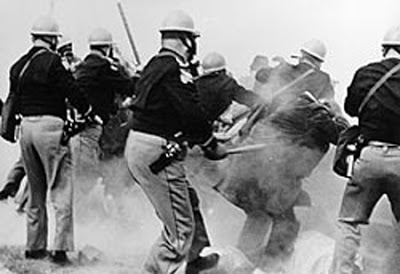
Remember Selma? Remember "Bloody Sunday?" Remember the Women's Suffrage Movement? All of that energy, all of those lives gladly sacrificed to give us a right we all too frequently take for granted. Please find the time to be heard tomorrow. Vote, for all of those who would have and couldn't and for those who still can only dream.
Acts of Love

Trapped in a chamber of wood and stone
Distanced by miles and orientation
Drowned in white sheets of perspiration
Rocked by the rattle and hum
The gentle lies, blind to the maelstrom
Baptized in symbolic initiation
Deaf to the cries of those who’d fallen
Amid the shouts of those reborn
Guitar strums sacred notes of freedom
Pages turned versed emancipation
Murals sprayed resistance and rebellion
Opened his palms raised them towards the son
Acts of love refuel a generation
Acts of love reverse the destination
Tuesday, May 18, 2010
Civil Disobedience and the Democratic Privilege

The story of the youth being detained for peacefully declaring their right to exist. National coverage, but what they need is justice, and that will not happen unless we exercise our democratic privilege. YES, I said privilege! For if we fail to exercise our privilege, we are no better off than the people who's actions we so happily denigrate in the comfort of our peaceful existences. Because evil requires the complicity of the silent majority, we cannot be among them. Speak your discontent, speak it loudly and often to all who will listen and all who need to hear.
Below are a number of sites that are carrying the story. What we need to do is create our own stories. We are the media that we've been waiting all this time for.
http://www.detnews.com/article/20100518/METRO/5180404/1409/Officials-want-Michigan-student-in-custody-in-immigration-protest
http://vivirlatino.com/2010/05/18/update-on-dream-act-students-arrested-in-sit-in-at-john-mccains-office.php
http://www.nytimes.com/2010/05/18/us/18dream.html?emc=
http://kasamaproject.org/2010/05/18/undocumented-students-arrested-at-arizona-protest/
http://bsnorrell.blogspot.com/2010/05/undocumented-students-arrested-at.html
http://community.livejournal.com/ontd_political/6217064.html
http://www.detnews.com/article/20100518/METRO/5180404/1361/Michigan-student-arrested-in-Arizona-immigration-protest
http://www.chasingevil.org/2010/05/courage-undocumented-students-arrested.html
http://www.chicagonow.com/blogs/chicanisima/2010/05/immigrant-students-arrested-at-mccains-office-to-be-arraigned-tuesday-chicagos-tania-unzueta-not-arrested.html
http://www.huffingtonpost.com/steve-ralls/a-gay-immigrant-reaches-f_b_579488.html
http://www.kgun9.com/Global/story.asp?S=12502141
http://www.azcentral.com/members/Blog/Valdez/83648
Tuesday, May 11, 2010
College Access for Public Service

Black teachers comprise only 8 percent of teachers nationwide and Black males only comprise 2 percent of teachers nationwide. We need a diverse teaching force to serve in our increasingly diverse schools. College access isn't only about bolstering the economy; it is also about expanding the pipeline to public service. Currently the United States ranks 12th amongst nations in percentage of 25-34 year olds receiving college degrees (College Board, 2008). Generally, this crisis in college access is talked about in terms of economic capital. While I am all for job creation and developing a competent workforce, I believe we also need to look at this crisis in terms of the loss of human capital. A lack of a college education means that you cannot become a teacher, or a principal, or a school counselor, or an educational researcher, or any number of jobs in education that are needed if we are to effectively reach and teach the next generation. I'm with Arne Duncan on this one; we need to step up and recruit, educate, and mentor a new generation of culturally diverse, intellectually curious, competent, and committed teachers to join the ranks of America's schools.
Friday, March 12, 2010
Powerful Knowledge

Picture, if you will, a world filled with peace, justice, equity, and democracy. A world of abundance fueled by creativity and production; spurned by fruitful collaborations across nations, religions, and ideologies. A world free of hunger and want; where bellies and minds are full and where all are citizens with powerful words and ideas to contribute to the global human family.
Why do we not have this type of world? What have we been led to believe about the inherent nature of humanity and about the inevitability of suffering, ignorance, and war? And how has our education precipitated these negative attitudes toward our world, our possibilities, each other and ourselves? Can the quality of education determine the quality of the human condition? Do we possess the untapped human potential to solve our greatest problems?
I believe emphatically that the answer is yes. Ignorance and nihilism are the leisure of privilege. We disdain what we cannot yet comprehend. Our Miseducation has made that incomprehension the norm. No weapon is more powerful than ignorance, save knowledge. No revolution has been or could be more complete than the immediate and total transformation of human thought and no institution is more essential to that transformation than our public schools. The challenge is ours to provide the necessary (and possible) critical global education to enable all of our people to live in the world of their dreams.
Saturday, March 6, 2010
Lifetimes of Action

A Day of Action is a great thing when people come together united for change. I applaud the students, faculty, and community members now and historically that have stood up and spoken out for what they believed in. What we need are lifetimes dedicated to action. The question is not whether the world can change, but how it will change and who will be responsible. A silent, fragmented majority is no advantage to anyone, but the people united and moving as one can overcome even the greatest of obstacles. The twentieth century was testimony to that; advocates came together to demand women's suffrage and civil rights. Students protested to end wars, free political prisoners, and abolish racist, colonial governments such as Apartheid South Africa. We are constantly besieged by the forces of greed, selfishness, and inhumanity. The variable is always the will of the people. What will we do with our moment? What will history say about us? The good news is that the choice is ours because that history is ours to define. We have everything that we need, free minds, the power to speak and act, and, most importantly, we have each other. I am with you because right now, as always, there is no other place to be.
Thursday, February 25, 2010
Civic Agency in Politically Dangerous Times

Real grassroots reform happens when small groups of people get together to think about how to become involved in the change they want to see. That thinking together, that critical dialogue then emerges into organic praxis. Reform happens best when it bubbles out of the cafes and living rooms out into the streets. What we need now is a model of civic agency in these politically dangerous times that forefronts the localized collective. This model needs to include the reclaiming of public space; it needs to have a critical political education, opportunities for dialogue and leadership development, and, most importantly, opportunities for real and active involvement in the immediacy of civil life.
Sunday, February 21, 2010
What We Really Want

I haven't forgotten the Bush years; the two-termed nightmare with its lies, its invasion, its economy at a grounded halt; the scorn of the world. How can we compare our problems now to our worst fears at the end of 2007? There's no way that we can go back there again. The only direction is forward, and we have the president to lead us. I am not daunted, I have no second thoughts, and my hope burns just as bright as the night we all cried when we made history. Change is painful, but the status quo is just plain lethal.
We must continue in our collective struggle. Hope is not short of will. We’ve only begun to fight. Our cause is just; a better world filled with more peace, more freedom and more light; healthier children with better opportunities to learn and grow; decent and plentiful jobs with livable wages; clean air, civil liberties. Human dignity and justice are not political terms, or at least they shouldn’t be. What we want is what everyone wants; only we want it for everyone.
Thursday, February 18, 2010
The Qualities of Youth
When I think about the change we need, what I think about most is the changes we must demand from ourselves. Radical and substantive changes that allow us to retain these qualities of the young. It will be our courage, our imagination, and our relentless pursuit of dignity and justice for all that will bring about the changes we want to see in others, in our schools, in our government and political institutions, and in the world at large.

Thursday, February 11, 2010
In Solidarity


Tuesday, February 2, 2010
My Track Record is My Life!

Yes I am an outsider! All of these years I have been with you; in classrooms, in the streets, in community centers working for social justice. I've been teaching, writing, listening, marching, advocating, strategizing for ways to make this world a better place. My track record is a lifetime dedicated to change, not politics. This work, this struggle is all I have known, it is all I have ever wanted to do. I've no desire to become a politician. What I want is to be a representative of the people, with the people, for the people.
Sunday, January 24, 2010
Time to Take a Stand

There comes a time in everyone’s life when you must take a stand. When you look around and you know that, if you don’t act, you may never get another chance. For me, for all of us Californians, I believe that time is now.
I was born and raised in California. My grandparents first migrated here from Louisiana in 1941 in search of a better life.
And California has been good to us. All nine of my grandmother’s children received high school diplomas and my mother and father both became schoolteachers via bachelor’s and credential programs in the California public universities. As a youth I was able to benefit from public schools in Oakland and San Jose where I completed my K-12 education. Upon graduation from high school I enrolled at the University of California Santa Barbara where I received my B.A. I then enrolled in a credential program at UC Berkeley and began teaching in the Oakland Public Schools. Ultimately I returned to UC Berkeley to earn a Masters and then a Ph.D. in Education. I am now a tenured professor, Division Head, Director of the Education Studies Minor, and Associate Director of the Institute for Democracy, Education, and Access in the Graduate School of Education and Information Studies at UCLA. My research and teaching at the university are focused on improving academic achievement and reforming underperforming schools. As you can see, my entire life and the history of my family have been tied to the educational systems of California. At their peak, they were the envy of the world and they have quite literally been our pathway to success and service.
Now I see these institutions that have meant so much to so many threatened by our recent economic crisis and our inability to invest properly in the future of the state. Schools that once served as models for the nation are now sorely lacking in resources. Here in the 37th Assembly District and throughout the state students are feeling the impacts of the lack of resources, teachers are threatened with losing their jobs, and our youth are at a disadvantage when compared to other states and other nations where there has been a more serious investment in education.
I couldn’t stand by in the halls of academia and let this happen to my own children and to the other children of hardworking Californians so I decided I had better do something about this. That is why I have decided to run for the California State Assembly; to fight for education, to fight for our children, for our future, and to restore our legacy as great and beautiful state, filled with sunshine, with diversity, with human and natural resources, and, most of all, with possibility.
I believe that with the right leadership we can restore the greatness of our educational institutions; we can protect the environment while creating jobs to assist in our ascent as a leader in the new green economy. And we can provide affordable and quality healthcare to all of our citizens. We can do these things and more together; our time is now and as my grandparents predicted, greatness is once again in our future.
Thursday, November 26, 2009
Let Us Make This A Time To Be Thankful For

Today I am thankful for the progress we've made, as a society, as a nation, as a people, and as a family. I am also thankful for the progress I've made in my own life. Thanks to the love and support of so many throughout the years I am now able to do things I would have never dreamed possible during my childhood days in Oakland and San Jose. And, though I know the road is long and many challenges lay ahead, I am reminded by my ancestors of just how far we have come. Onward, forward, together my friends. I am thankful for the time, for life, for a cause, and most of all, for all of you. Together, let us make this a season to be truly thankful for. After all, we are the change that we've been waiting for.
Friday, November 20, 2009
Hope
November 11, 2008
Last Tuesday, November 4, 2008 I stood along with 100 strangers at the offices of the Democratic Club of Camarillo and cried as I heard the acceptance speech of president-elect Barack Obama. I thought about my great grandmother and my grandmothers and what they would make of this moment. I thought of my father and his stories of attending segregated schools in the south during the 1950s. I thought of all that I have seen and heard in my 37 years that would allow me to become cynical and think that moments like this one would never arrive. And then I looked into the eyes of those around me and the 75,000 people sitting in Grant Park in Chicago and the billions around the world who stayed up through the middle of the night or awakened early in the morning to share in the moment. And the one word, the once idea or concept that emerged for me was hope. Its an important life defining concept for me; I end all of my books with the word hope, because I know that our humanity is ultimately tied to our willingness and our ability to hope.
But I also know that sometimes it is difficult to hold onto hope during dark times, when hope seems more like foolishness. When the cool people, the intellectuals, or those in power tell us to stop hoping and to start lowering our expectations for our lives and our worlds. And in my own dark moments I fall victim to this way of thinking. But standing in that office alongside people who have given so much time and energy to a cause that they believe in and thinking about my students at UCLA who have been so active and so energized, thinking about my own children and their chants from the bedroom I realized that it was time to permanently expunge the cynic, time to be openly and unabashedly hopeful. And so last Wednesday felt easy still high on life and the fumes of election night mania. One week later, though, I still feel it. I’m not ready to give it up. And maybe that does sound foolish, but I’d rather be a fool than an intelligent pessimist.
And what is so wrong with thinking that a small group of committed people can actually change the world? What is so wrong with thinking that maybe, in a small way, we already have?
Thursday, November 19, 2009
Invest in Schools and Students, not Standards
I agree with much of what is currently contained in the document. We do need students who are able to critically interrogate texts. We do need students who are able to address a research question and collect credible data. We need students who are able to use technology as a tool to distribute valuable information to authentic audiences.
My problem is that the real problem in education has very little to do with the absence of national
standards. Without investing in educational resources how can we effectively evaluate educational outcomes? If we are sending students to schools (and we are) that lack adequate resources such as books, computers, credentialed teachers, and modest class sizes, how can we hold the students responsible for whether they learn?
Far too often the schools that lack adequate resources are located in rural and inner city communities and they serve our most disenfranchised populations. The groups most targeted by standards (and it is thinly veiled) are also the groups in my state who receive the fewest educational resources. If I wanted someone to climb a mountain, but I didn’t provide him or her with the tools or the training, I should expect failure. Now if I were to provide all of the tools and training, I could legitimately expect a higher degree of success. The difference is not in talent, but in preparation.
I would rather focus on the material and human resources needed to create effective schools. In Los Angeles County, for example, English classes have as many as 40 students! It would be far more beneficial to cut class sizes than to introduce new standards. You cannot simultaneously disinvest in education and expect it to get better; things just don’t work that way.
I would like to see a genuine investment in education as our national priority. I applaud Congress for allocating $100 billion in the American Recovery and Reinvestment Act to the improvement of our educational infrastructure. Much of this money, however, will merely offset the estimated $80 billion in cuts in education spending at the state and district levels because of the economic downturn. The amount is substantial until we place it in the context of the $700 dollar stimulus or the $900 billion contemplated in health care plans in Congress.
We need to transform literacy instruction. But we will not achieve our goals if we raise standards without raising our investment in our students, our teachers and our schools.